What you pay for in a blade
A Loki W81 leaves the factory for about €28. A Butterfly Super ZLC with a famous name on it costs $399.99 in a US shop. Both are a few thin sheets of wood with fiber glued in. This piece follows the money through wood, glue, presses, handles, rejects, selection, a player's name, and the shops in between.
Draft, 16 Nov 2026. Blades only. Built from my own observations plus public sources, factory videos and retailer data, linked in the text or at the bottom. Prices were checked on 16 Nov 2026 unless stated.
How a blade is made
Most factories follow the same order of work. I think a $250 blade differs from a $30 one mainly in how carefully each step is done and how much wood gets thrown away.
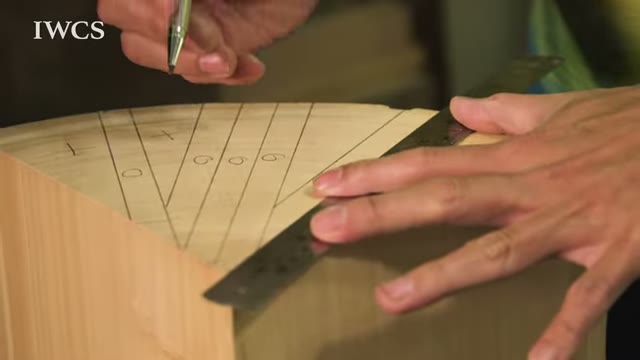
Choose the wood
Old hinoki is marked on the log face. Only the circled parts get used.
Ariex, WoodCulture, 5:30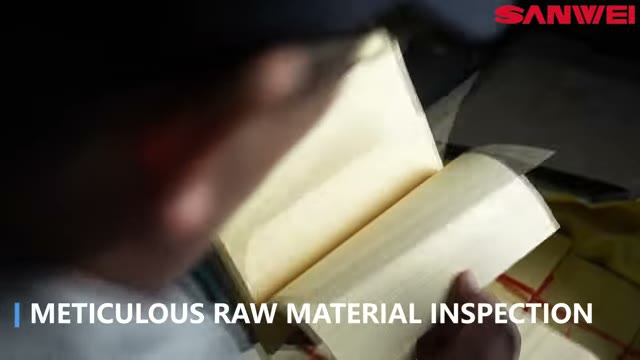
Check the veneers
Veneers are sliced or sawn, then measured with a caliper and sorted.
SANWEI Official, 0:37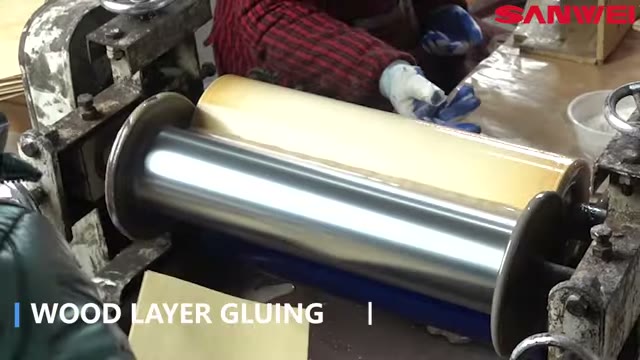
Spread the glue
Sanwei feeds each veneer through a glue roller by hand. Nittaku would not film this step and called it a trade secret.
SANWEI Official, 0:43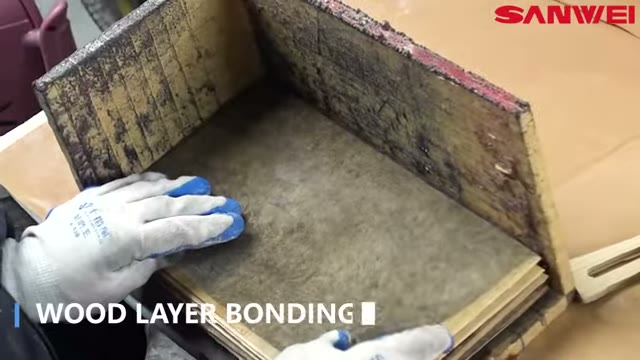
Lay up the plies
Plies and any fiber sheet are stacked in a jig, one blade-size panel at a time here.
SANWEI Official, 0:47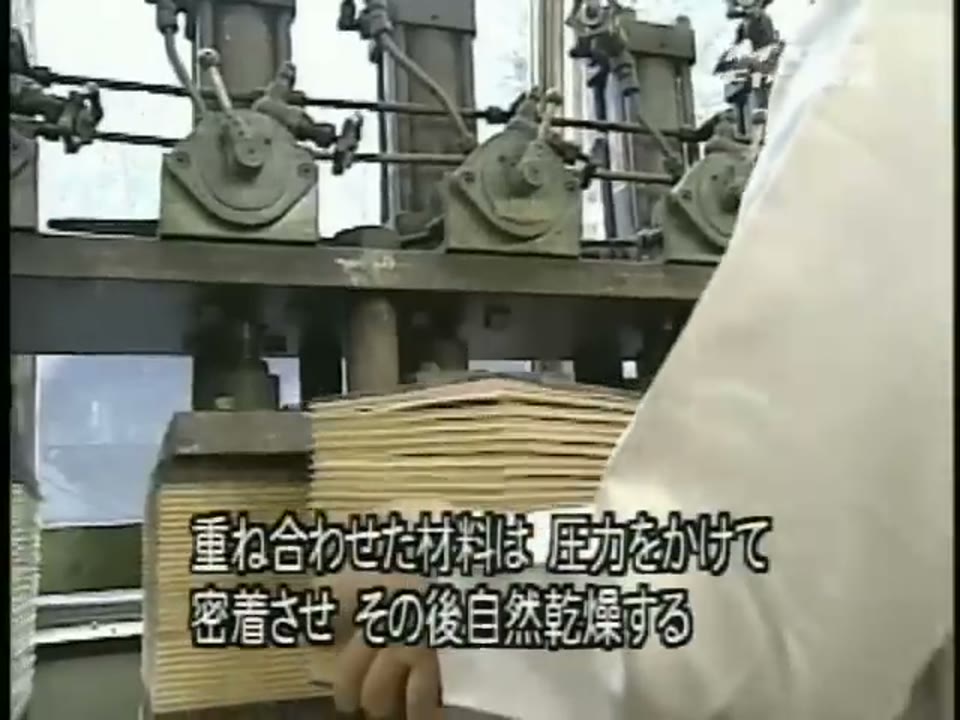
Press and cure
Stacks of blanks go into presses, then dry in the air. Nittaku's supplier keeps them pressed for 2 days and dries them for 2 more weeks.
JST Science Channel, 2001, 3:20 · Nittaku, 3:48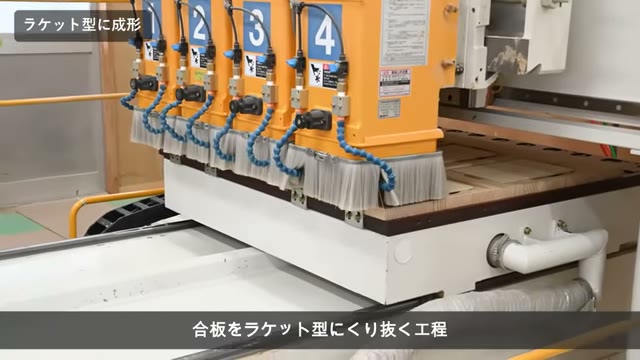
Cut the outline
After sanding to thickness, a multi-head CNC router cuts the blade shape out of each panel.
Nittaku, 4:30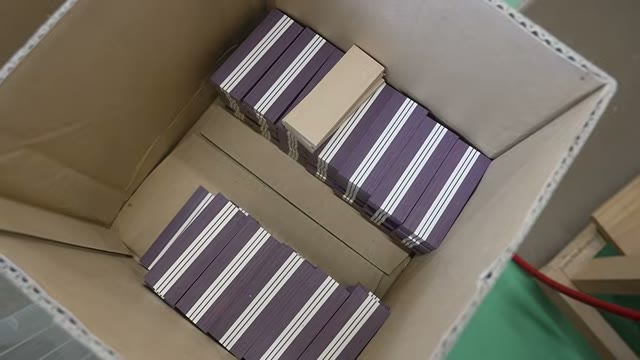
Make the handle
Laminated grip blocks are routed, glued to the blade and pressed. Butterfly still chamfers handle edges by hand.
プロセスX, 6:41 · Butterfly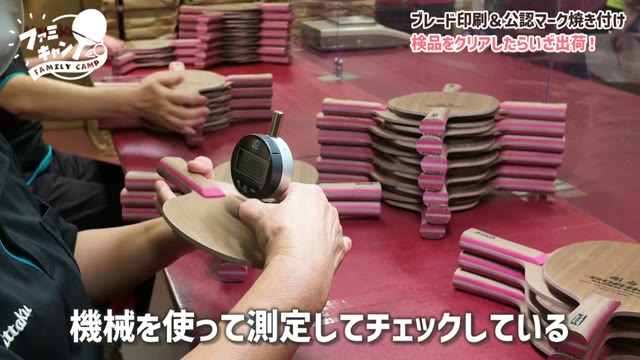
Measure and finish
Blades are sanded, coated, printed and measured by machine before they are packed.
Nittaku, 16:40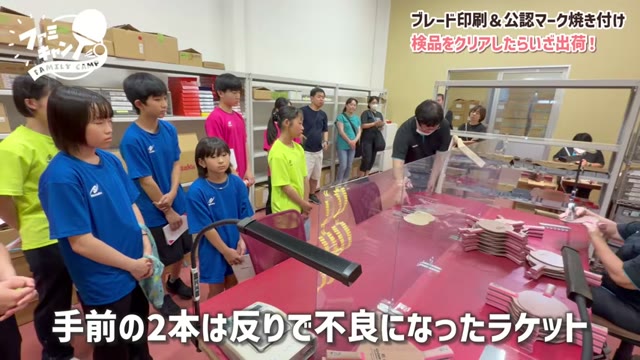
Source Factory videos by Sanwei, Nittaku, Butterfly/Tamasu and Ariex; Yinhe's published process list.
Panel size and pressing
Before a blade is cut out, its plies are glued into a panel. A big sheet lets one press cycle and one router pass turn out many blades, which is cheap. It also means nobody picks the wood blade by blade, so a knot somewhere in the sheet ends up inside one of them. Small panels, down to one blade per panel, cost more handling but let the maker pick each piece of wood. Author
In the factory footage, Butterfly glues its plywood usually into the size of an A4 sheet
. Nittaku's supplier, Sanwei and the Korean custom shops work one blade per panel. The only large panels with several blades nested in them that I could find were at Chinese OEM plants: a Loki promo video and Haitian, a factory that says it makes 350,000 blades a year. Source ↗
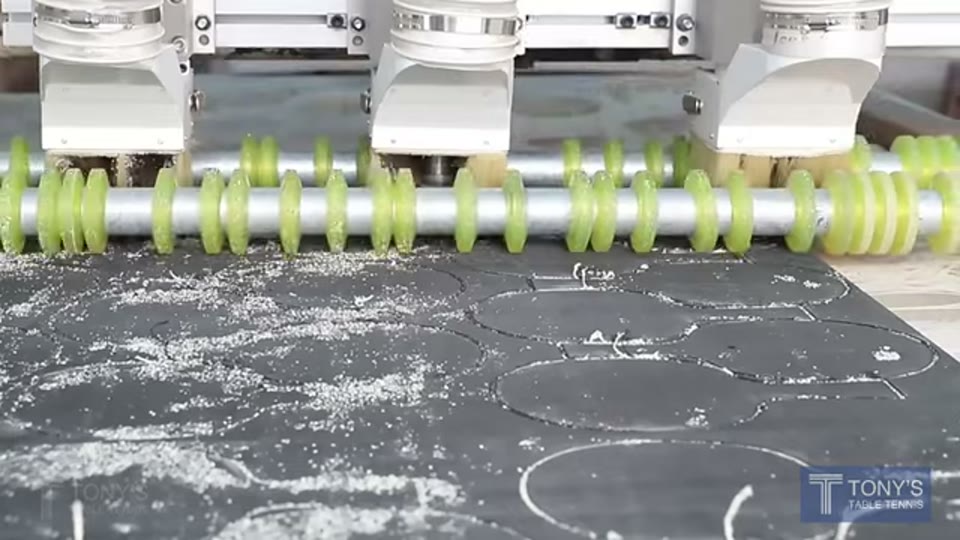
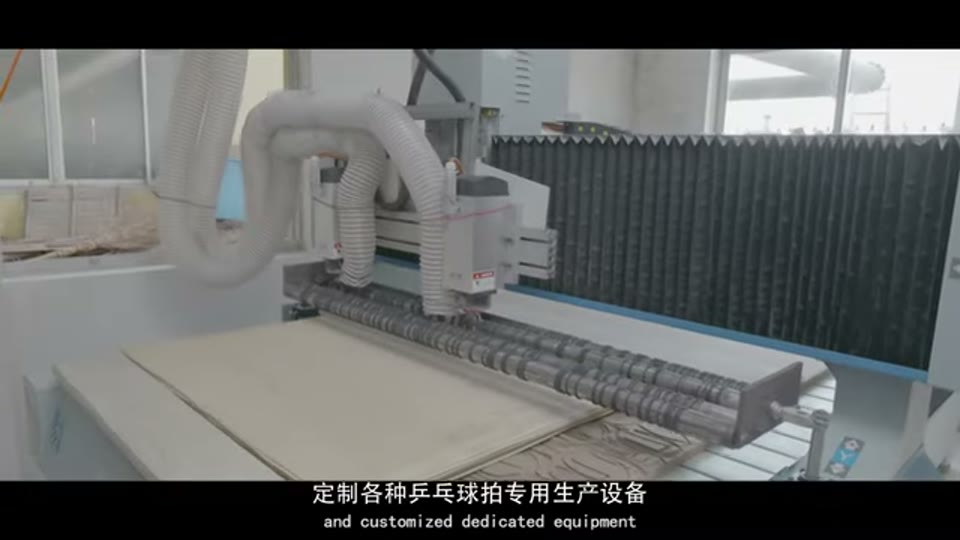
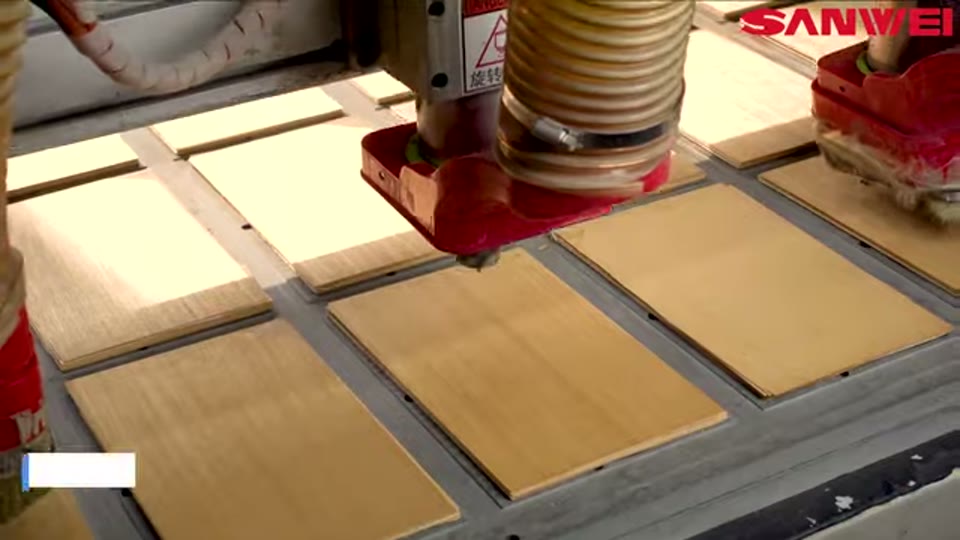
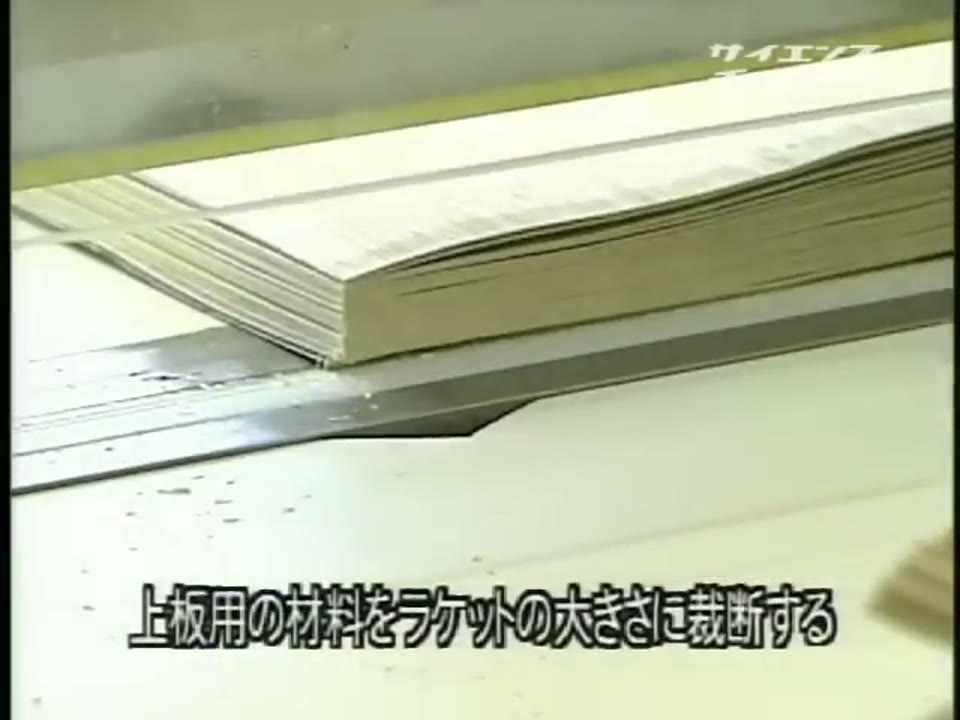
cut to racket sizebefore gluing. JST Science Channel, 2:14
More blanks per stack means fewer press cycles per blade. In the Tamasu film I count about 20 blanks in one press stack. Nobody publishes this number, so I can't say how stack height differs between a cheap factory and an expensive one. Author
Plywood troubleshooting guides blame patchy glue bonds on uneven core thickness, low pressure, or cold spots in the platen
, and fix them by calibrating veneers to one thickness and raising the pressure. In a thick stack the middle also heats later than the outside. A big panel spans more veneer thickness variation than a single blank, so it is harder to press evenly. Source ↗ Estimate
Bonding, sound and selection
In a video from a Beijing shop, two former Chinese national team players pick one Fan Zhendong ALC out of a box of about 25. One of them says he picked blades for the national team's main squad from 2012 to 2016. Their method is to tap the blade, look at the surface and weigh it. Seller
"Dong dong dong" means it feels like all seven layers of wood are bonded together.
Former Chinese national team blade picker, One Punch Table Tennis, 03:06
The sound test is about bonding. A good blade should not go dang dang
. It should go dong dong dong
, which, he says, means it feels like all seven layers of wood are bonded together
. The one they chose was crisp, but at the same time, it's solid. It won't feel hollow.
He also says players sometimes send their favourite blades back to the factory to have them pressed with a professional machine. After pressing, it essentially compresses the blade tighter.
Seller
Together with the pressing problems above, this suggests a chain. Pickers reject blades that sound hollow. Hollow sound comes at least partly from weak or uneven bonds. Uneven bonds are more likely in large panels pressed in big batches. So a factory that presses small panels should get more good-sounding blades per hundred and needs to pick less. I think this is right, but no maker has published yield by panel size, and nobody has measured tap sound against bond strength in a blade. Sound also depends on density and ply thickness: a Turkish review of blade research found ply thickness affected vibration more than wood species did. Source ↗ Author Estimate
Their other checks: overall density (the most important thing
), how evenly a ball bounces off the middle, and balance, with DHS blades heavier in the head and Butterfly more centred. They pay no attention to marks on the face, which they say doesn't affect performance at all
. Butterfly says the same about knot and thread patterns. Source ↗
Wood
The timber itself is cheap. In December 2025 West African ayous logs traded at about €220 per cubic metre, and Ghanaian sliced face veneers at €1,260 to €1,835. A blade head is roughly 0.0001 m³ of wood, so even at veneer prices and with half of it thrown away, the wood in a blade costs well under €1. Source ↗ Estimate
Selection costs more than the timber. Butterfly says that for some types of wood up to half of the wood ends up not used
, and that some of its wood is nearly 300 years old. It doesn't say why. Part of it is rejects: Butterfly turns wood that could not be used for competitive table tennis blades
into souvenirs and ukuleles. Part is probably geometry. By my rough estimate, a blade's outline, head plus handle tongue, covers only about a third of an A4 sheet, so most of a rectangular panel becomes offcuts whatever the wood quality. Estimate A Taiwanese hinoki maker marks circles on a log face and says Only the parts marked with circles can be used.
Old Kiso hinoki is now hard to get: in 2014 Japan set aside 16,579 hectares of national forest to preserve the natural Kiso hinoki stands, with a 3,908 hectare core under strict protection. Source ↗
| Species | Typical use | Density kg/m³ | Janka lbf | Price note |
|---|---|---|---|---|
| Kiri | light core | 280 | 300 | plantation grown, exported to Japan |
| Ayous | core | 380 | 440 | relatively inexpensive; mostly sold as veneer |
| Hinoki | 1-ply, face | about 430 | 300 to 800 | TT database figure; Kiso supply restricted |
| Limba | face, under | 555 | 670 | moderate; figured black limba costs more |
| Koto | face | 595 | 940 | mid range; IUCN Vulnerable |
| Black walnut | face | 610 | 1,010 | high for a domestic species; high wastage |
| Gaboon ebony | face | 955 | 3,080 | among the most expensive of all available lumbers |
Most standard blades use sliced veneers, which are steamed first. Soulspin, a German custom maker, says that steaming makes the wood very brittle
. andro, Donic and Soulspin all advertise sawn veneers on their premium lines. Sawing wastes a kerf of wood with every cut, so it costs more. No brand admits to using rotary-peeled veneer, the cheap plywood-grade cut. Source ↗
What a hobbyist pays for face veneer
Buying koto or limba face veneer as a single person costs far more per square metre than the timber trade pays, but it is still pocket money per blade. Two faces of a 157 × 150 mm blade need about 0.05 m². Source Estimate
| Listing (16 Nov 2026) | What you get | Price | Per m² | Two blade faces |
|---|---|---|---|---|
| Top-Wood, black limba | 1 sheet, 30 × 15–21 cm, 0.5 mm | €3.00 | €48–67 | about €3 |
| Top-Wood, black limba | 1 sheet, 250 × 18 cm, 0.55 mm | €19.65 | €44 | about €2 |
| eBay UK, koto | 9 sheets, 430 × 150 mm | £26.12 | £45 | about £3 |
| eBay UK, koto | 1 sheet, 930 × 200 mm | £17.00 | £91 | about £4 |
| eBay, black koto "Table Tennis Racket DIY" | 2 pieces, 17 × 28 cm, 0.6 mm | $18.99 | $200 | $18.99 |
Ordinary craft veneer works out at €44 to €67 per m² at Top-Wood and £45 to £91 on eBay, or about €2 to €4 for both faces of a blade. Bulk sliced veneer from the ITTO report comes to about €1 per m² at 0.6 mm thick, so a hobbyist pays roughly 40 to 100 times as much, and still only a few euros per blade. The same koto sold with "table tennis" in the title costs about six times as much per blade as the generic sheets. Estimate
White wood, yellow wood
The pickers in the selection video sort by colour. They say yellow wood comes from the inner, older part of the tree and white wood from the outside, and that white blades play harder. That story fits limba a bit and koto badly. Wood-database describes koto as pale yellow heartwood; little color variation from sapwood to heartwood
, and notes that steamed or dyed koto veneer is common. Limba heartwood is light yellowish to golden brown
and the sapwood paler, but the two are not clearly demarcated
, and limba darkens with age. A yellow limba blade may just be an older one. I once had an Innerforce with yellow limba faces that I liked a lot, but that is one blade and proves nothing about colour. Author Source ↗
Drying and heat treatment
Drying takes time and space, and wood sitting in a store for a year or more is money not earning anything. Yinhe says it air dries for over a year and speeds things up with a drying kiln it credits to the Japanese maker Darker. Butterfly's 2001 film talks about one to three years for hinoki. Nittaku dries glued panels for two weeks before it sands them. Source ↗
Some brands go further and bake the veneers. Donic holds its BURN veneers at 200 degrees for 24 hours
, which it says hardens them and removes all moisture. Source ↗ andro heated its now-discontinued Temper Tech veneers to 150°–230° C
and said the wood becomes considerably harder, more stable, and lighter
and will not absorb moisture anymore
. Source ↗ Stiga sells VPS blades with special temperature treated middle veneers
that it says give great stability
, but publishes no temperatures or times. Source ↗
Why baking changes the wood
Wood cell walls are made of cellulose, hemicellulose and lignin. Hemicellulose is the part that soaks up water most readily, and it is also the first to break down under heat. A 2021 review of heat treatment describes it in three steps: hemicellulose degrades through deacetylation, depolymerization, and dehydration
, the wood loses hydroxyl groups (the spots where water molecules attach), and the remaining cellulose becomes more crystalline, so even fewer of those spots stay open to water. Lignin cross-links at the same time. The result is wood that takes up less moisture and swells less: steam at 150 °C for four hours cut moisture uptake by 10 to 25%. Source ↗
Donic and andro say baking hardens the wood, but the same review found that stiffness (MOE) and bending strength (MOR) fall as the temperature rises, bending strength by 47% after six hours at 200 °C, and that the wood becomes more brittle
. It also loses mass, which fits andro's "lighter". A baked blade holds less water, and wetter wood vibrates at a lower frequency, so an untreated blade softens a little in a humid hall while a baked one should change less. That is my reading of lab results on wood. Nobody has compared a heat-treated blade with an untreated twin. Source ↗ Estimate
Fiber
ITTF law 2.4.2 says at least 85% of a blade's thickness must be natural wood, and each fiber layer may be no thicker than 7.5% of the total or 0.35 mm, whichever is smaller. Source ↗ ALC is arylate (understood to be Kuraray's Vectran) woven with carbon. ZL fiber is PBO, sold by Toyobo as Zylon. Butterfly says Super ZLC has 1.8 times as much densely woven Carbon-Fibers and ZL-Fibers in mass
, without saying compared with what. Source ↗ The raw fiber in a blade weighs very little: two layers of a 100 g/m² fabric over a blade head come to about 4 g. Priced as raw fiber, at $40 per kg for carbon or roughly $200 per kg for PBO, that is 15 to 75 cents. A maker glues in woven cloth, and spinning and weaving make cloth cost far more per square metre than its weight in fiber. Estimate
Processing the dense hybrids costs more. Writing about Super ZLC, Butterfly says It is difficult to interweave different fibers
and The high-strength cutting knife became frazzled after a few cuts of the material.
When Butterfly launched its first carbon blades in 1978, it says they cost three to four times
as much as normal blades. Source ↗
The high-strength cutting knife became frazzled after a few cuts of the material.
Butterfly, on making Super ZL-Carbon
Fiber at hobby prices, per A4 panel
Composite shops sell fiber cloth by the running metre. At R&G, a German supplier, the rolls are 100 cm wide, so one running metre is one square metre. Butterfly glues one blade's plies into a sheet about the size of A4 (0.062 m²), and a 5+2 blade needs two fiber layers in that sheet. Source ↗
| R&G fabric (16 Nov 2026) | Per running metre | One A4 layer | Two layers, one panel |
|---|---|---|---|
| Carbon 200 g/m², plain weave, 1 m roll | €33.57 | €2.09 | €4.19 |
| Same, 0.5 m roll | €42.34 | €2.64 | €5.28 |
| Carbon/aramid 68 g/m² (T300 carbon + Kevlar 49), 1 m roll | €67.39 | €4.20 | €8.41 |
| Same, 10 m roll | €57.38 | €3.58 | €7.16 |
So a hobbyist pays about €4 to €8 for the fiber in one blade. The thin carbon/aramid hybrid, the closest thing on sale to what goes into an ALC-type blade, is the dearer one. Compare that with the raw fiber in the same 200 g/m² carbon cloth: about €2 to €8 per m² at bulk carbon prices, against €33.57 for the cloth. Most of what you pay for is the weaving and the small-quantity markup. A factory buying whole rolls pays less than a hobbyist, but I found no wholesale cloth prices, so the real per-blade figure sits somewhere between the raw-fiber cents and these euros. Estimate
| Butterfly family (US, 16 Nov 2026) | ALC | ZLF | ZLC | Super ALC | Super ZLC |
|---|---|---|---|---|---|
| Innerforce Layer | $164.99 | $189.99 | $244.99 | ||
| Outerforce | $164.99 | $244.99 | |||
| Timo Boll | $184.99 | $214.99 | $269.99 | ||
| Harimoto Innerforce | $184.99 | $269.99 | $249.99 | $399.99 | |
| Fan Zhendong | $184.99 | $269.99 | $249.99 | $399.99 | |
| Viscaria | $184.99 | $269.99 |
Within one shape, ALC to ZLC adds about $80, and ALC to Super ZLC adds about $215. Moving the same fiber from the outer to the inner position (Outerforce vs Innerforce Layer) changes nothing. Other brands price fiber very differently. Nittaku's Acoustic Carbon costs $15 more than the wooden Acoustic. Stiga's Carbonado 45, with the lightest carbon fabric, costs more than the Carbonado 245 with 200 g/m² fabric. GEWO and JOOLA sell carbon blades for $34 to $40. Source ↗
Handle and labor
Handles are made separately and glued on. Butterfly's 2001 film routes them from laminated stock, two grips from each blank. Nittaku's supplier routes seven or eight grips per fixture, glues them by hand and presses each blade in its own pneumatic press. Fancy flared or multi-piece handles add more routing, gluing and hand finishing per blade. Source ↗ Author
Haitian's video claims 350,000 blades a year. Loki claims daily output of up to 100,000 pieces, but that covers everything it makes. At the other end are small workshops making a few blades a week, covered in the next section. A Taiwanese hinoki shop with three employees had NT$8 million in revenue a year, according to a TV report. Source ↗ Source ↗ Seller
Rejects add to labor cost: every blade rejected for a knot, a void, warping or the wrong weight is paid for by the ones that pass. Nittaku shows warp rejects and Butterfly says up to half of some wood types goes unused but doesn't split that into rejects and offcuts, and no maker publishes a reject rate. Source ↗
Handmade options
If you want to pay for labor and selection directly, small workshops will build a blade for you. Prices start below a Viscaria and go up to about a Super ZLC. You pay for a person's time and your choice of plies and handle, and most makers also record what went into the blade.
| Maker | Where | What you get | Price, blade only | Wait |
|---|---|---|---|---|
| SDC | Portugal | full custom: veneers, core, fiber, head and handle shape | €80 (5-ply) to €140 (5+2), plus €15 per side for ZLC or Super ZLC, €7 per side for Kiso hinoki faces, €10 to €60 for complex handles | numbered queue at about 4 blades a week; roughly 24 weeks for a new order in Nov 2026 |
| Soulspin | Neuwied, Germany | fixed models, an online configurator, or a one-off build on quote; about 16 species, basalt, carbon, Kevlar-carbon or glass; sawn veneers | €120 (Medium Speed) to €210 (Steffen Mengel AR); one-offs quoted | not stated |
| Re-Impact | Lemförde, Germany | light, thick balsa-heavy blades in left- and right-handed versions; handle made to your hand measurements | €139 to €219 | up to 18 days for custom |
| Mamba Blades | Gerzat, France | workshop models with published frequency (Hz), or custom geometry, balance and weight | €149 to €229; custom quoted | about 10 working days (forum report) |
| Vodák | Rájec-Jestřebí, Czechia | joinery workshop of Jiří Vodák, making blades by traditional hand craftsmanship since 2006; large catalogue incl. thick balsa and combi blades; to order: any veneer layup, two-wood cores, custom head size and shape (veneer change about CZK 250 to 400, other shape CZK 400, other handle CZK 500); weight guaranteed to within +2 g; used by Czech Extraliga players | about €125 to €132 per catalogue model | 7 to 14 working days |
| Palatinus Handmade (also OSP) | Hungary | full custom; serial number, signed certificate, a spare sheet of the face veneer, and records to rebuild the blade later | €249 to €289; hinoki quoted | 4 to 5 weeks |
| Arx Blade | La Crèche, France | founded March 2026 by coach Mathieu Pochon-Robert and luthier Michel Watrelot; French woods, chosen and checked by sound; fixed models or a custom build | €84.99 to €129.99; custom €149 | not stated |
| Butz Blades | Germany | Jannik Butz; each blade pressed, sanded and sealed by hand; defensive, Innerforce-style and carbon builds; handle shape and weight to order | not published; sold through Frija-TT-Shop and classifieds | not stated |
| 乒匠研创 studio | Chengdu, China | Wu Wei, successor to a paddle maker working since 1953; about 1,000 custom orders a year in 2023, including for Nie Jiayi and Wang Ziang | not stated | a week to several months |
| Lucky Dog | Athens, Georgia, USA | configurator with koto or limba faces, balsa, ayous or kiri core, ALC or ZLC chosen per side | on request | about a week |
| Darker | Tokyo, Japan | fixed one-ply Kiso hinoki models; the retailer says Darker never glues hinoki pieces together | €345 to €371 for the Speed 90 at TT11 | stock |
Prices are what the makers' sites showed on 16 Nov 2026, except Darker, which is a retailer price. Seller
Only Vodák guarantees the weight, to within +2 g. Soulspin says outright that it does not. Custom builds generally can't be returned: Soulspin and SDC both say so, although SDC repairs or refunds a manufacturing fault. Re-Impact goes furthest, with a 30-day money-back guarantee and a 14-day paid trial. Vodák gives the standard EU 14-day withdrawal and a 24-month warranty on manufacturing defects. Almost none of them say which glue they use or how their veneers are cut. Soulspin advertises sawn veneers. Mamba's founder says on a forum that he has been a violin maker for more than 15 years, and SDC's maker learned woodworking on guitars. Seller
For comparison, andro's TP_LIGNA line is factory made, advertises sawn veneers Made in Germany
, and costs €119.95 to €169.95, about the same as the cheaper custom builds. Source ↗
Hand-picked blades
The same Beijing shop ran a test on a Fan Zhendong ALC their picker chose. They glued it with the same rubbers as a 2070-rated player's own FZD ALC (H3 Neo National blue sponge 41° 2.1 mm on the forehand, D09C on the backhand, the forehand rubbers boosted the day before) and let him play both. He chose the picked one for its fuller arc, stronger loops and more precise short game. His own blade was easier to control under pressure, and the picked one went long more often in rallies. Club players who tried them said they felt like different blades. Seller
It is one pair of blades. The hosts knew which blade was which, and the testers referred to them by side. Boosted rubbers vary sheet to sheet, and one amateur called a blade too stiff
and blamed the oiled sponge. The video was made and sponsored by a shop that sells selected blades. Still, it fits what I'd expect: two blades of one model can differ, which is what people pay a picker for.
DHS sells tiers of the same Hurricane Long 5. The commercial version is far cheaper than the selected National version: one US retailer lists $224.95 against $629.95 for the W968 National (date uncertain). One shop sells "personal" W968s, said to have been made for named players, at $1,047 to $1,847. A buyer has no way to check where such a blade came from. I left out one shop's blog that explains these tiers, because the same shop sells these blades at those prices. Seller Author
The player's name
Some brands sell what is close to the same blade with and without a player's name. Butterfly's own spec table and US shop give the clearest pairs.
| Plain | Player version | Published specs | Price gap |
|---|---|---|---|
| Innerforce Layer ALC $164.99 | Harimoto Innerforce ALC $184.99 | both 5+2 ALC inner, 6.0 mm; 85 vs 88 g; Harimoto head 1 to 2 mm larger | +$20 (+12%) |
| Innerforce Layer ZLC $244.99 | Franziska Innerforce ZLC $269.99 | every published column the same except weight, 85 vs 88 g | +$25 (+10%) |
| Stiga Cybershape Carbon CWT €229.90 | Truls Moregardh Edition €259.90 | same published specs; the retailer says there is no differencein play | +€30 (+13%) |
In Japan the Innerforce gaps are bigger: ¥15,000 against ¥18,000 for the ALC pair (catalogue prices, date unknown). But the rule is not consistent. Viscaria, Timo Boll ALC and Fan Zhendong ALC share published specs and all cost $184.99. Fan Zhendong Super ALC is $20 cheaper than Viscaria Super ALC with matching specs. Outside the Innerforce family, Butterfly's prices follow the fiber and the name adds nothing. Simon Gauzy's signature blades are with andro, and I found no plain andro twin to compare them with. Source ↗
Loki does it too
Two of Loki's standard inner aramid-carbon blades are listed with the same build: limba faces, ayous underlayers and core, two inner aramid-carbon layers, a 157 × 150 mm head and FL or ST handles. My test blade is the cheaper one. Author
| Model | Thickness | Weight | UK price | Sweden |
|---|---|---|---|---|
| W81 Wei Shihao ADC | 6.0 mm | 89 g | £79.99 | €79.73 |
| Liang Jingkun ADC | 5.95 mm | 88 g | £139.99 | €154.10 |
The same published build costs £80 with Wei Shihao's name and £140 with Liang Jingkun's, 75% more. Loki UK (lokisport.co.uk), which calls itself the official UK distributor, rates the LJK slightly slower: 13.0 against 13.2 on its 15-point speed scale. Back at the factory, my W81 ADC costs about €28 on Alibaba. Author Source ↗
Loki's "Special" versions often come with different specs: sometimes different materials, sometimes a different head size, often a different handle. They cost more again, from £104.99 for the W81 Player ADC Special up to £219.99 for the LJK ADC Special, and £449.99 for a hand-picked, numbered LJK No.1 with a larger head. Part of that price pays for those differences. Author Source ↗
Loki's outer-fiber blades show the same pattern. The Telson Speed (£49.99, 5.7 mm, 86 g) and W81 Wei Shihao ARC (£79.99, 5.8 mm, 88 g) share koto faces, ayous, a kiri core and outer arylate-carbon, and Loki UK gives both a speed of 13.0. The ARC is the same blade as the W81 Outer ALC I reviewed. Source ↗ Author
Nobody publishes table tennis royalty rates. In sporting goods generally, athletes get about 5 to 10% of the wholesale price. On a $185 blade with a wholesale price around $90, that would be $4.50 to $9 per blade, so the royalty alone would not explain the $20 to $30 premiums in the table. Estimate
After the factory
Factory prices on Alibaba give a sense of the floor. Loki lists a gold-logo W81, which I believe is the ARC version, at $35 to $50 each for small orders and $30 to $43 from 200 pieces. My own W81 ADC cost about €28. Yinhe's Pro-01, a 5+2 ALC, is about $38 to $42. Loki's 7-ply ALC is about $25 to $31. A custom logo adds 10 cents per blade at Yinhe. These are asking prices, not negotiated ones. Seller
Between factory and shop come shipping, import duty and the distributor. EU duty on table tennis equipment is 2.7%. On top of that comes import VAT at the national rate, which is 23% in Poland (rates run from 17% in Luxembourg to 27% in Hungary). VAT is charged on the value of the goods plus shipping plus duty. Since 1 July 2026, parcels under €150 pay a flat €3 duty per item type instead of the 2.7%; before that they were duty free. Source ↗ In the US it is 5.1%, or 17.6% in total for goods from China as of November 2026. Butterfly's US distributor sets minimum advertised prices, so shops cannot undercut each other in public. A 2026 survey of Japanese catalogues put the average shakehand blade at ¥16,066, with Butterfly and Stiga the most expensive brands. Several brands share factories: forum sources say Woodhouse in Tranås makes Yasaka blades and has made blades for other brands, and Seth Pech's SP Carbon appears to be made by Loki. Source ↗ Estimate
One blade, three checkouts
My Alibaba order arrived in Poland on 13 September 2026, after the €3 duty started and before the handling fee, and the taxes came to about 40% of the blade's price. Since 1 November 2026 each item in a parcel from outside the EU also pays a €2 handling fee, so the same order today comes to 53% in the chart below. Here is what my W81 ADC costs delivered to Poland, bought three ways, at today's prices. Author Source ↗ Estimate
- Alibaba, factory direct
- €28 blade. €12 shipping (an example). €3 EU duty per item type, charged since 1 July 2026. €2 EU handling fee per item, charged since 1 November 2026. 23% VAT on blade, shipping and duty together. Courier fees not included.
- AliExpress
- About €60 typical, some listings nearer €50, with VAT already in the price. Shipping is extra: €12 here as an example. The same €3 duty and €2 handling fee apply.
- German shop, W81 ADC
- €90 shelf price plus €15 shipping, both including VAT. Selling to Poland, a shop usually charges Polish 23% VAT. The blue part holds everything else: import, distributor and shop margin.
Where the money goes
| Cost driver | What it costs the maker | What you can check |
|---|---|---|
| Wood species | cents per blade for common woods; much more for old hinoki or ebony | stated species; ask what the face ply is |
| Wood selection | labor plus rejected wood; Butterfly leaves up to half of some wood types unused (it doesn't say how much is rejects and how much offcuts) | weight and look of the faces; same-model consistency |
| Panel size | small panels mean more handling and more press cycles | rarely stated; factory videos show it |
| Pressing and curing | press time and days to weeks of drying | tap sound, flatness, no hollow spots |
| Pre-treatment | kiln time, stock held for a year or more | named treatments (BURN, VPS, Temper Tech) |
| Fiber | cents as raw fiber, €4–8 per blade as hobby-priced cloth; factory cloth price unknown; dense hybrids are harder to weave and cut | fiber type; placement does not change Butterfly's price |
| Handle | extra routing, gluing and hand finishing | shape, finish, glue lines |
| Yield and QC | rejects | warp on a flat surface; edges |
| Selection by hand | a skilled person's time | sold as "selected" or tier names; hard to verify |
| Player name | royalty plus brand margin | compare with the plain twin if one exists |
| Trade | shipping, duty (2.7% EU, up to 17.6% US from China), EU import VAT (23% in Poland), distributor and shop margins | price in other countries |
Sources
Factory videos
- Introducing Loki Table Tennis Company TonysTableTennis, 2023-07-28
- Haitian / wellssport.com factory video 2020-11-17
- SANWEI production video SANWEI Official, 2024-03-13
- THE MAKING (84), Tamasu/Butterfly JST Science Channel, filmed 2001
- Nittaku factory visit with Mima Ito Nittaku, 2024-10-10; 2 days pressed, 2 weeks drying at 3:48
- Yoshida Mokkosho racket production プロセスX, 2024-11-01
- Nittaku junior camp, factory chapter 2026-10-22; warp rejects around 16:31
- Ariex hinoki blades, Taiwan WoodCulture, 2023-09-01
- SP Carbon build story PechPong TT, 2026-08-01
Selection videos
- Pro Secrets to Choosing the Perfect Table Tennis Blade! One Punch Table Tennis, 2026-07-04; shop-made
- Does Blade Selection Skill Really Matter? The Blind Test Challenge! One Punch Table Tennis, 2026-07-08; shop-sponsored
Manufacturers
- Butterfly: blade manufacturing process · wood use · fibers · Butterfly blades part 1 · spec table · US shop
- Donic glossary · andro blades · Soulspin sawn veneers
- Palatinus Handmade · OSP history same Hungarian workshop · SDC prices · Soulspin shop · Re-Impact · Mamba Blades · Lucky Dog · Darker Speed 90 at TT11
- Yinhe 26-step process translated, 2012
Rules, wood and science
- ITTF Statutes 2026 law 2.4.2
- The Wood Database ayous, limba, koto, kiri, walnut, ebony pages
- ITTO Tropical Timber Market Report, Dec 2025
- Japan Forestry Agency, Kiso forest 林野 vol. 218, 2025
- Yıldızbaş et al., Table Tennis Blade Production and Features 2022
- Ali et al., Hydrothermal Modification of Wood: A Review Polymers, 2021
- Woodworking Network: pressing problems
Prices and trade
- tabletennisstore.us catalog fiber price ladders
- Loki UK blade matrix · Liang Jingkun ADC · chtt.se Loki blades UK distributor status unverified
- spinfactory.de: Cybershape Carbon CWT Truls Edition
- Loki W81 on Alibaba · Yinhe Pro-01 · Loki 7-ply ALC
- European Commission: VAT rate limits · Tax Foundation: EU VAT rates 2026
- European Commission: €3 duty on low-value parcels · Council of the EU: €2 handling fee
- R&G carbon 200 g/m² · R&G carbon/aramid 68 g/m² · Top-Wood black limba
- Stiga Infinity VPS V · andro Temper Tech · Taiwan TV report on Ariex
- EU tariff 9506 40 00 · US tariff 9506.40.00.00 from China
- Average shakehand blade price in Japan, 2026
- Bowmar (Butterfly US) price policy